🎸 Musical Instruments
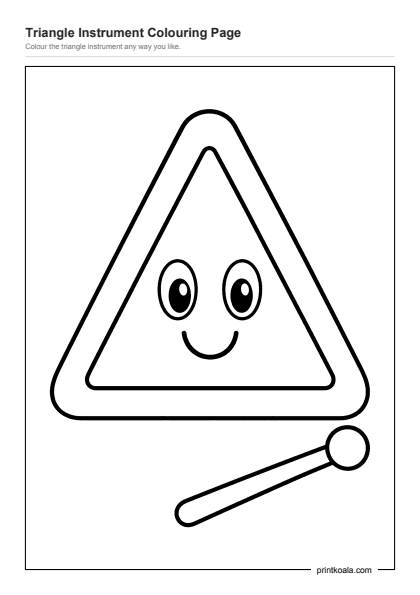
Triangle Instrument Coloring Page
Ages 2–414
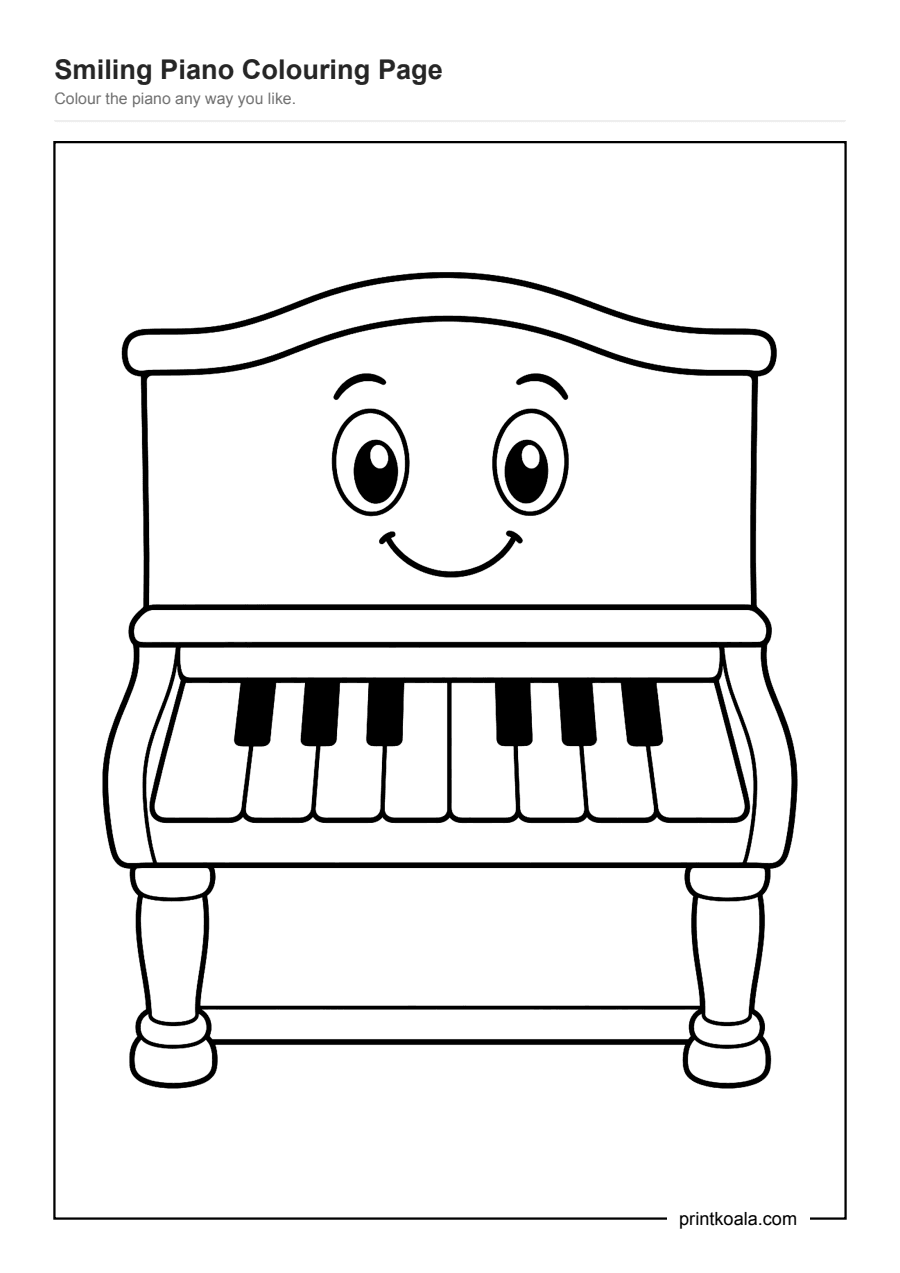
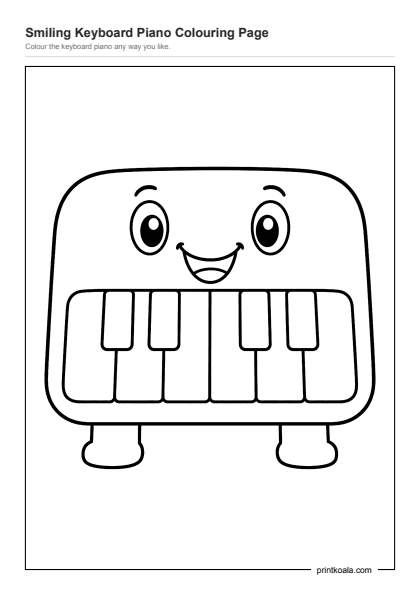
A toy upright piano with a happy face above the keys, a wavy lid top and seven wide white keys to color in.
Free, no sign-up. Downloaded 8 times · A4 · Print at 100% scale
This is a small upright piano drawn like a friendly character, not a realistic instrument. Above the keyboard sits a big smiling face - two round eyes with curved eyebrows and a wide curved mouth - set into the piano's front panel. The lid has a gentle wavy top edge, and the keyboard shows seven broad white keys with five black keys sitting on top of them in the usual two-and-three grouping. Underneath, the piano stands on two thick, turned legs joined by a straight crossbar near the bottom, each leg ending in a rounded foot.
Most of this page is made up of large, calm spaces: the top panel around the face, the lower body below the keys, and the legs are all big enough for a preschooler to fill in without straying outside the lines. The keyboard is where the page asks for more care, since the seven white keys and five black keys are separate narrow shapes sitting right next to each other, which is good practice for staying inside a smaller boundary once the easy areas are done. The face gives a natural reason to talk about how the piano feels, happy and ready to play, before settling into the keys.
Because the big panels are so forgiving, this suits a younger child who mostly wants to pick colors and cover space, while the keyboard section adds just enough of a challenge to hold an older preschooler's attention too. It sits on the easier end of the Musical Instruments sheets, with no small background details to slow things down.
Let your child start with the big face and body panels first, then move to the keyboard last, since the narrow keys need the steadiest hand. If the black keys prove fiddly, coloring just their outlines still looks finished.