🎸 Musical Instruments
Smiling Piano Coloring Page
Ages 2–58
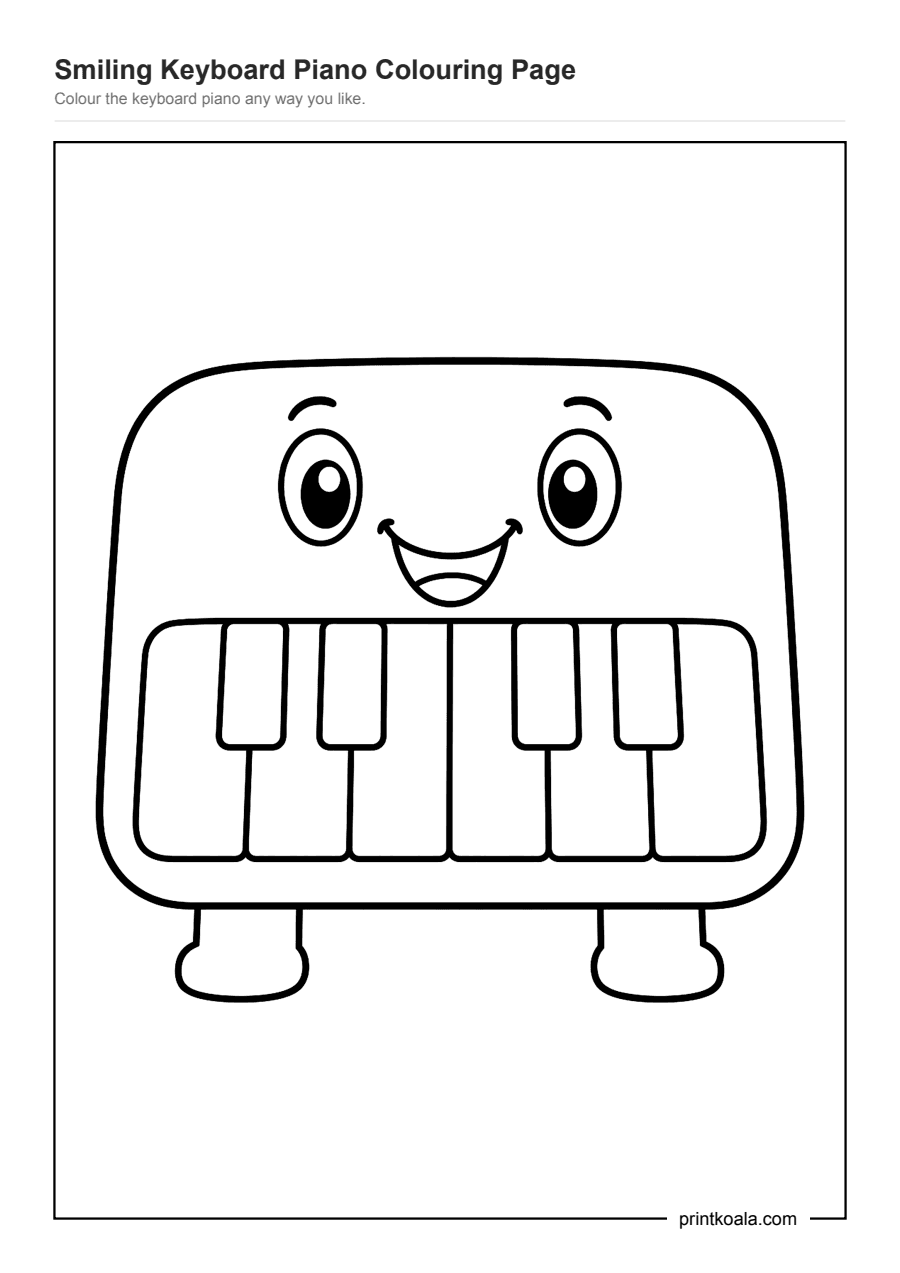
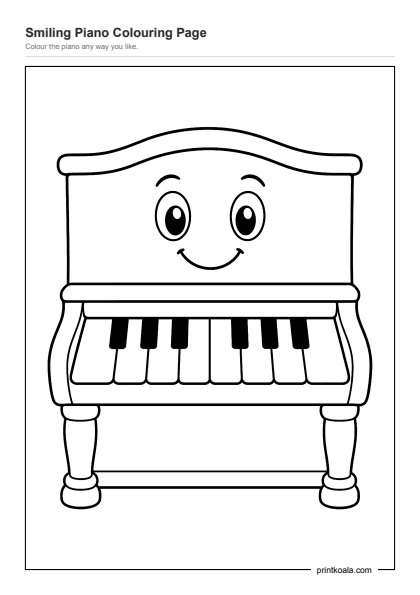
A round-bodied toy piano with a big smiling face, two stubby legs and six oversized keys to color.
Free, no sign-up. Downloaded 18 times · A4 · Print at 100% scale
This page shows a toy keyboard piano with a face on it. Two big oval eyes sit above an open, smiling mouth, each eye topped with a curved eyebrow and a small round highlight left inside the pupil. Below the face is the keyboard itself: six wide, evenly spaced rectangular keys running the full width of the body. The whole instrument sits on two short, rounded legs, and the body has soft, rounded corners rather than sharp ones.
Almost every shape here is large and closed, which is exactly what makes it satisfying to color. The body alone is one broad area a child can fill in a single color without much wrist control, and the six keys give them a chance to either keep going with one color or turn it into a pattern, alternating two colors across the keys. The face is the only part that asks for a steadier hand, since the eyes, eyebrows and mouth are smaller and sit close together. It is a natural page to talk over while coloring: ask what color a smiling piano should be, or whether every key needs to match.
There is nothing fiddly or densely detailed on this sheet, so it suits younger colorers well, including children who are still working on staying inside bigger lines. Older preschoolers can use it to practice neater work on the smaller face details once the keys and body are done. Either way, it prints as one clean, uncluttered drawing with no background to fill in, so the whole page can be finished in one sitting.
Start with the big body shape so your child gets an early win, then move to the six keys one at a time. Save the eyes and mouth for last, since they're the smallest parts. If a key goes outside the lines, just call it a "wonky note" and keep going.