🎸 Musical Instruments
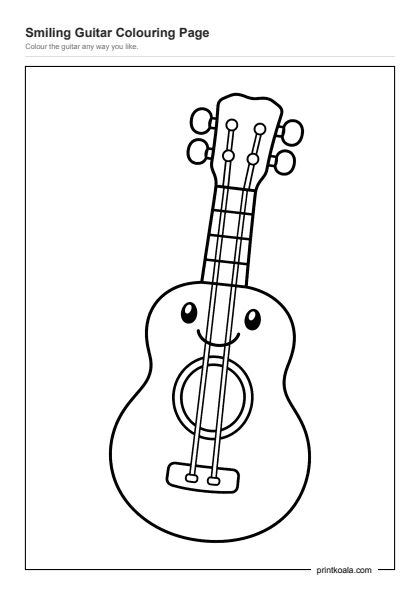
Smiling Guitar Coloring Page
Ages 2–59
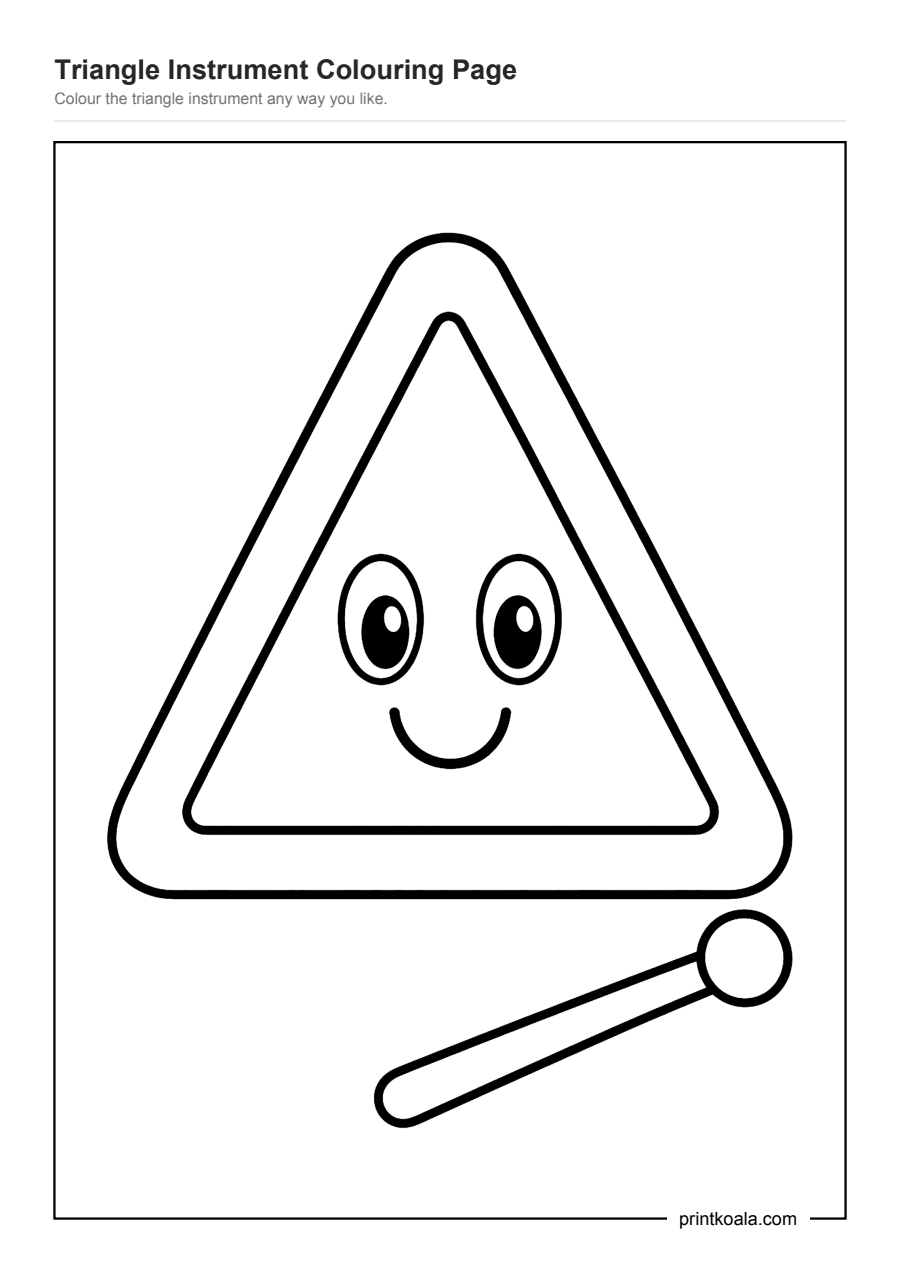
A smiling triangle instrument with a rounded frame and its own round-headed beater resting beside it.
Free, no sign-up. Downloaded 14 times · A4 · Print at 100% scale
This page shows a triangle instrument drawn as a friendly character, not just a shape. Its frame has rounded corners and is drawn as a thick band, an outer triangle line and an inner triangle line running side by side all the way round. Inside sits a simple face: two oval eyes, each with a small white highlight dot, and a curved smile underneath. Off to the lower right lies the beater that would strike it, a round ball on the end of a long straight handle, angled as if it has just been set down after a tap.
The band around the triangle is the main event for little hands, a wide, even strip that runs in three straight sections with soft corners, forgiving of a wobbly crayon. The open middle, where the face sits, gives a big clear space to fill in one go, while the eyes and their tiny highlight dots ask for a steadier, slower hand if a child wants to keep the white dots clean. The beater adds a second color decision entirely separate from the triangle, so a child can make the instrument one color and the mallet another, which is an easy way to start talking about matching or contrasting colors.
There is nothing fiddly here beyond those small eye highlights, so this sheet sits on the easy end of the shelf. It suits younger colorers who want a picture that reads clearly the moment they pick up a crayon, and it works well as a first look at a percussion instrument before moving on to busier drum or xylophone pages.
Start with the wide triangle band, since it is the biggest area and hardest to rush through neatly. Save the eye highlight dots for last, working slowly around them. Ask your child what color beater would match or clash with their triangle.