
🌀 Mazes & Puzzles
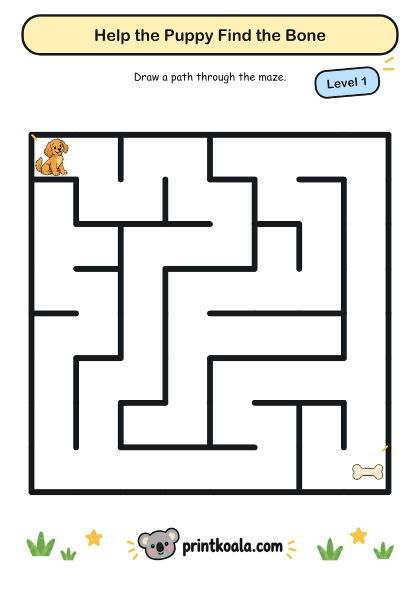
Help the Squirrel Find the Acorn — Level 1
Ages 3–530
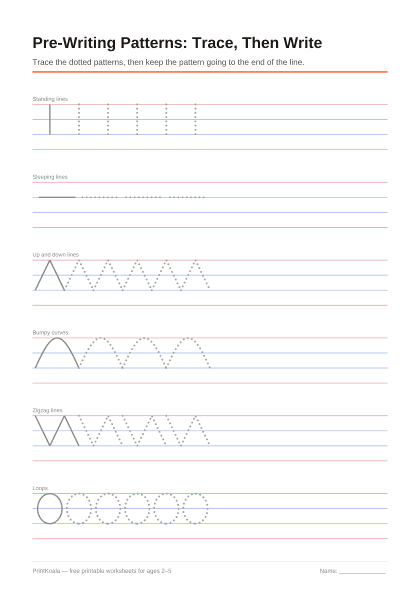
Three-year-olds start to control the crayon rather than just hold it. These worksheets focus on pre-writing strokes — straight lines, curves and zigzags — plus counting to five and sorting by color and shape. Sessions of five to ten minutes work far better than one long sitting.
Children vary enormously at this age and these are averages, not targets. If a sheet is frustrating, try one from Age 2 instead.


Three is the year the grip changes. The full fist loosens into something closer to a grown-up hold, the wrist starts contributing instead of the whole arm, and for the first time a mark can be aimed. It does not arrive on a birthday — most children move through it somewhere across the year, and a child who is still fisting at three and a quarter is not behind.
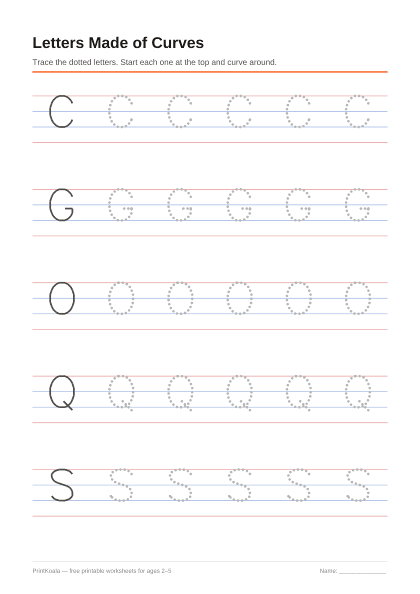
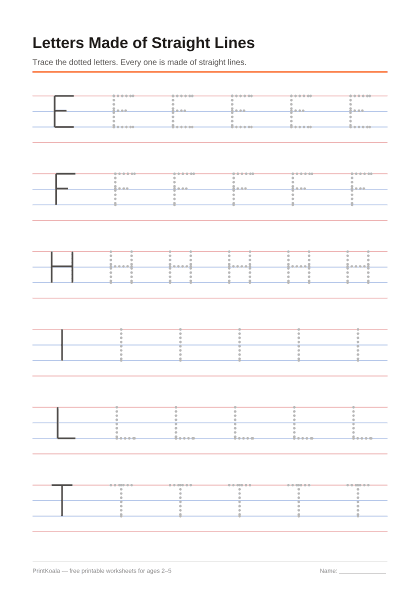
What that unlocks is copying. Draw a vertical line and a three year old can have a go at a vertical line. Draw a circle and they will produce something round. This is the foundation everything else sits on, because every letter of the alphabet is built from lines, curves and circles, and a child who can copy those three shapes has the raw material for letters whether or not they have met a single one.
Handwriting programs teach the strokes in a sequence, and the sequence is not arbitrary — each one isolates a different piece of control. Vertical lines come first because pulling down towards yourself is the easiest movement to control. Then horizontal, which crosses the body and is harder than it looks. Then circles, then crosses, then diagonals, which are genuinely difficult and usually the last to arrive, often not until four.
There is no need to be rigid about it, but there is a reason not to start with the zigzag sheet. A child who cannot yet hold a straight line will find a zigzag frustrating, and the sheet gets blamed for something that is really about sequence.
If a tracing sheet is going badly, drop back a step rather than pushing. The straight-line sheet after a failed zigzag is not a punishment, it is the missing rung.
Most three year olds can recite numbers well before they can count things, and the two are genuinely different skills. Saying "one two three four five" is a song. Touching five buttons and landing on "five" at the last one is arithmetic, and it is much harder — it needs the child to coordinate pointing with saying, and to understand that the last number said is the answer.
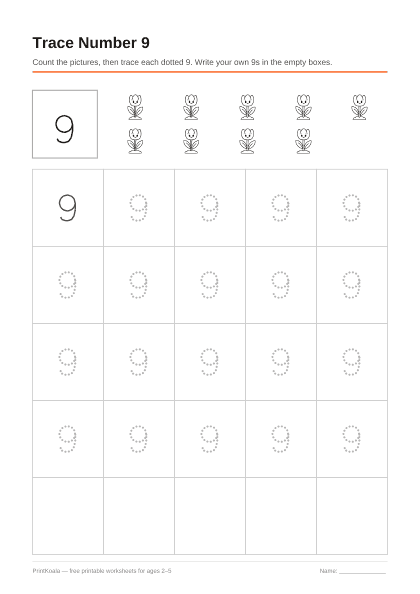
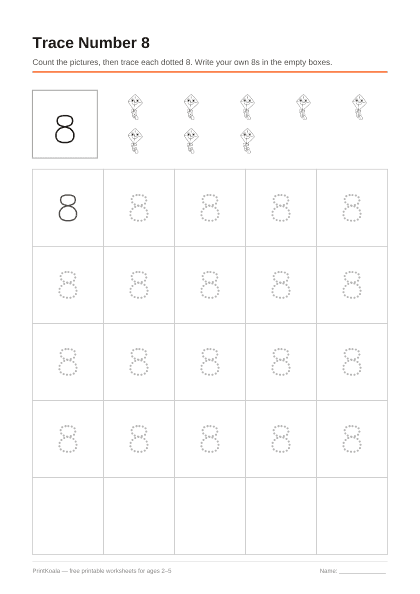
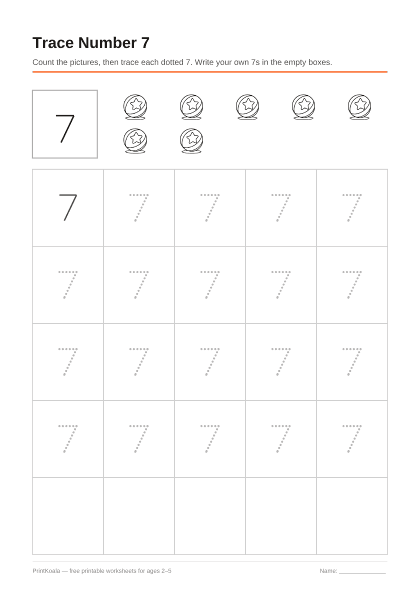
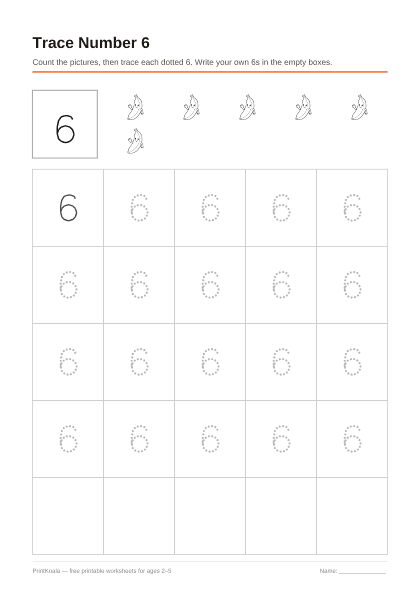
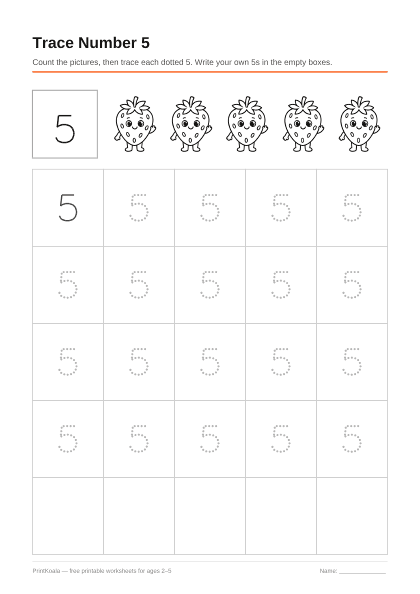
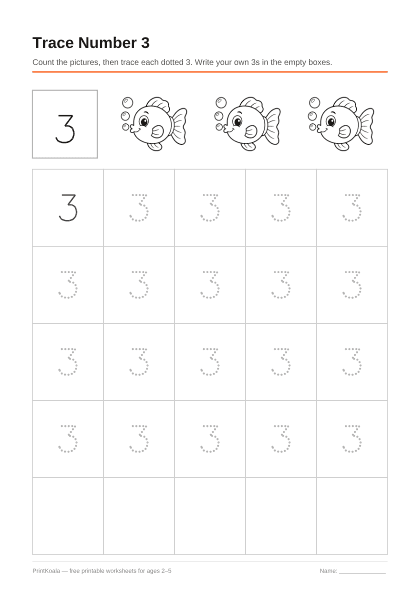
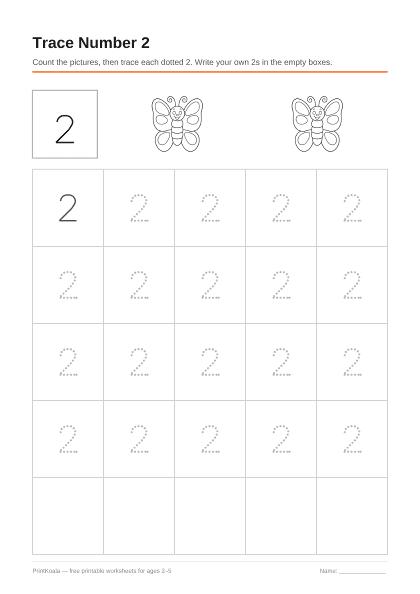
That is why the counting sheets here always pair a numeral with a set of objects to touch. A child who can write a neat 5 but cannot hand you five blocks has learned a shape rather than a number, and the shape is the less useful half.
Five is a realistic ceiling for the year. Counting to ten reliably usually belongs to four.
Five to ten minutes, once or twice a day, beats half an hour on a Sunday. Three year olds concentrate in short bursts and the burst is where the learning happens; everything after it is just sitting at a table being asked to keep going.
When a sheet is not working, the useful question is which part is failing. If the marks are wild, the sheet is above their current stroke control — go simpler. If the marks are fine but they stop after ten seconds, it is attention, not skill, and a shorter sheet or a different subject will fix it. If they refuse before starting, it is very often the subject: a child who will not trace lines will frequently trace the same lines if they are the road a truck drives along.
That last one is worth taking seriously. At this age the picture is most of the motivation, and choosing a sheet about something they already love is not a trick — it is how you get the practice to happen at all.
Children vary enormously and the boundaries here are soft. If these sheets are too easy or too hard, the neighbouring pages are the place to look.